Asiana Airlines Baggage Policy
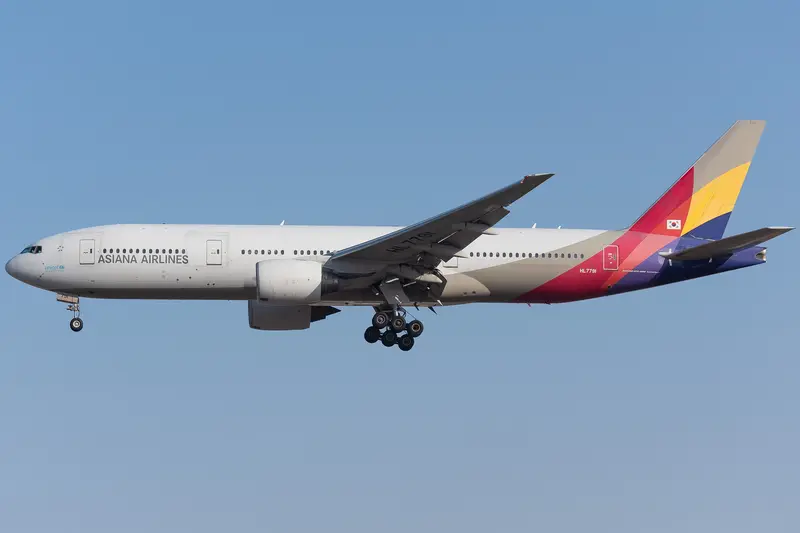
Detailed knowledge of the Asiana Airlines Baggage Policy equips passengers with exact dimensions, weight caps, and fee structures. For travelers choosing Asiana Airlines, understanding their specific baggage rules is key to a smooth journey, free from unexpected fees or airport delays. Asiana, a leading South Korean carrier, maintains distinct regulations for carry-on and checked luggage, with variations based on your travel class and destination, particularly for flights involving the United States.
This comprehensive guide details Asiana Airlines' baggage policy for 2026, including carry-on dimensions, checked luggage allowances, personal item rules, and the latest updates to excess baggage fees. We'll also cover special items, elite member benefits, and practical tips to ensure your packing aligns perfectly with Asiana's requirements.
Asiana Airlines Baggage Allowances at a Glance (2026)
A quick summary of complimentary baggage for various travel classes and routes.
| Category | Economy Class | Business Class | Infants (under 2) |
|---|---|---|---|
| Carry-On Bags | 1 bag (max 10kg / 22lbs) | 2 bags (max 10kg / 22lbs each) | Not applicable (personal item only) |
| Personal Item | 1 item (fits under seat) | 1 item (fits under seat) | 1 item (e.g., diaper bag) |
| Checked Baggage (US Routes) | 2 bags (max 23kg / 50lbs each) | 2 bags (max 32kg / 70lbs each) | 1 bag (max 23kg / 50lbs) + stroller/car seat |
| Checked Baggage (Non-US Int'l) | 1 bag (max 23kg / 50lbs) | 2 bags (max 32kg / 70lbs each) | 1 bag (max 10kg / 22lbs) + stroller/car seat |
| Checked Baggage (Domestic Korea) | Total 20kg (44lbs) | Total 30kg (66lbs) | Stroller/car seat only |
Note: Maximum linear dimensions for checked bags are generally 158 cm (62 inches). Always verify specific allowances for your ticket class and route on the official Asiana Airlines website.
1. Asiana Airlines Carry-On Baggage & Personal Items
Asiana Airlines enforces specific restrictions on cabin baggage to ensure safety and comfort for all passengers. These rules cover both your primary carry-on bag and any personal items you bring on board.
Standard Carry-On Luggage Limits
Your main carry-on bag must fit securely in the overhead compartment. It's crucial to adhere to both weight and size limitations:
- Weight Limit: Each carry-on bag must not exceed 10 kg (22 lbs).
- Size Limit: The maximum dimensions are 55 cm (22 in) x 40 cm (16 in) x 20 cm (8 in), including handles, pockets, and wheels. The sum of these three dimensions must not exceed 115 cm (45 inches).
Asiana Airlines Carry-On Size
Allowed size and weight limits for Asiana Airlines carry-on baggage.
| Class | Bags | Max Weight | Max Dimensions (L+W+H) |
|---|---|---|---|
| Economy | 1 | 10kg (22 lbs) | 55 x 40 x 20 cm (22 x 16 x 8 in) |
| Business | 2 | 10kg (22 lbs) each |
Connecting Flights & Multi-Airline Trips: If your itinerary involves connecting flights or partner airlines, make sure to check and compare their specific baggage allowances: Arajet Baggage Policy and Austrian Airlines Baggage Policy.
Personal Item Rules
In addition to your main carry-on, Asiana Airlines permits one personal item. This item must be small enough to fit underneath the seat in front of you, ensuring it doesn't obstruct aisles or emergency exits.
- Allowed Personal Items: Common examples include a laptop bag, handbag, briefcase, small backpack, camera bag, or a coat.
- Size Limit: Typically, personal items should not exceed 40 cm (16 in) x 30 cm (12 in) x 20 cm (8 in).
- Important: Unlike some budget carriers, a laptop bag generally counts as your personal item, not a carry-on, meaning you can bring both.
Key Considerations for Cabin Baggage
- Business Class Advantage: Passengers in Business Class enjoy a more generous allowance, permitted two standard carry-on bags, each up to 10 kg, in addition to their personal item.
- Gate Enforcement: Be aware that Asiana staff may strictly enforce these limits at the boarding gate. Bags exceeding the size or weight restrictions for carry-on luggage will be tagged and checked into the cargo hold, potentially incurring unexpected excess baggage fees.
- Restricted Items: Remember to pack all liquids over 100ml, sharp objects, and certain powders (especially on flights to/from the US) in your checked luggage to comply with airport security rules and TSA regulations.
2. Asiana Airlines Checked Baggage Allowance
Asiana Airlines' free checked baggage allowance varies significantly based on your class of service and, crucially, your flight destination. The policy differentiates between routes involving the United States and all other international or domestic flights.
International Flights to/from the U.S. (Americas)
If your itinerary includes a flight segment to or from the United States (including U.S. territories like Saipan and Guam), the following rules apply:
- Economy Class: You may check two bags. Each bag must not exceed 23 kg (50 lbs).
- Business Class: You may check two bags. Each bag must not exceed 32 kg (70 lbs).
- Maximum Dimensions: For all classes, the sum of the length, width, and height of each checked bag must not exceed 158 cm (62 inches).
International Flights (Non-U.S. Routes)
For international journeys that do not involve the United States (e.g., Seoul to London, Sydney to Incheon), the allowance is as follows:
- Economy Class: You may check one bag. This bag must not exceed 23 kg (50 lbs).
- Business Class: You may check two bags. Each bag must not exceed 32 kg (70 lbs).
- Maximum Dimensions: Similar to US routes, the linear dimensions (L+W+H) of each bag must not exceed 158 cm (62 inches).
Domestic Flights within South Korea
Flights solely within South Korea operate under a "weight concept" rather than a "piece concept." This means your allowance is based on total weight, not the number of bags, provided individual bags meet size limits.
- Economy Class: A total weight allowance of 20 kg (44 lbs). You can distribute this weight across multiple bags.
- Business Class: A total weight allowance of 30 kg (66 lbs).
- Tip: While a total weight is given, it's wise to keep individual bag weights reasonable for ease of handling and to avoid potential issues.
3. Asiana Airlines Excess Baggage Fees (Updated 2026)
Asiana Airlines adjusted its excess baggage fees, with new rates becoming effective in January 2026. These fees are incurred if your luggage exceeds the standard allowance in terms of weight, size, or number of pieces. It's always more cost-effective to plan ahead than to face these charges at the airport.
Excess Baggage Fee Summary (Effective Jan 2026)
Fees are subject to change and may vary slightly by specific route. All figures are approximate and in USD unless otherwise noted.
| Category | Conditions | U.S. Routes | Non-U.S. International Routes |
|---|---|---|---|
| Overweight Fees | 24 kg (51 lbs) - 32 kg (70 lbs) | $100 USD | $35 - $110 USD (route dependent) |
| 33 kg (71 lbs) - 45 kg (99 lbs) | $400 USD (advance notice required) | Contact Asiana for details (often requires cargo) | |
| Oversize Fees | Linear dimensions 159 cm (63 in) - 203 cm (80 in) | $200 USD | $90 - $210 USD (route dependent) |
| Extra Piece Fees | Each additional bag beyond allowance | $200 USD per bag | $60 - $140 USD per bag (route dependent) |
Note: Bags exceeding 203 cm (80 inches) in linear dimensions or 45 kg (99 lbs) in weight may not be accepted as checked baggage and might need to be shipped as cargo. Always contact Asiana Airlines directly for specific costs and arrangements for extremely large or heavy items.
Smart Strategies for Excess Baggage
- Pre-Purchase Online: Asiana often offers discounts (up to 10%) for pre-purchasing additional baggage allowance through their website or mobile app before your travel date. This is almost always cheaper than paying at the airport counter.
- Consolidate: If traveling with companions, try to consolidate luggage to stay within everyone's combined free allowance.
- Consider Shipping: For very heavy or numerous items, especially on long-haul flights, exploring dedicated baggage shipping services might be more economical than paying airline excess fees.
4. Exceptions & Special Baggage Items
Asiana Airlines provides specific guidelines for certain passengers and types of luggage, including elite members, infants, and specialized equipment.
Asiana Club Elite Member Benefits
Loyalty to Asiana Airlines through its Asiana Club program comes with valuable baggage perks:
- Silver Members: Receive an additional 10 kg (22 lbs) weight bonus on non-US international routes, or one extra bag (up to 23 kg) on US routes.
- Gold Members: Enjoy an additional 20 kg (44 lbs) weight bonus on non-US international routes, or one extra bag (up to 23 kg) on US routes.
- Diamond, Platinum, and Million Miler Members: Benefit from a substantial additional 30 kg (66 lbs) weight bonus on non-US international routes, or one extra bag (up to 32 kg) on US routes.
Infants and Children's Baggage
Traveling with little ones means extra gear, and Asiana accommodates this with specific allowances:
- Infants (under 2 years, not occupying a seat): Are allowed one checked bag. For US routes, this bag can be up to 23 kg (50 lbs). For non-US international routes, it's 10 kg (22 lbs). Additionally, one fully collapsible stroller, car seat, or bassinet can be checked free of charge.
- Children (2 years and older, occupying a seat): Receive the same baggage allowance as an adult in their respective travel class, plus one fully collapsible stroller or car seat.
Sports Equipment & Musical Instruments
Bringing special items like golf clubs or a cello requires careful planning:
- Golf Bags: Asiana offers a traveler-friendly policy. One golf bag containing clubs and shoes, along with one general bag, can be counted as a single piece of checked luggage, provided their combined weight does not exceed 32 kg (70 lbs). If the combined weight exceeds this, overweight fees apply.
- Musical Instruments:
- Small Instruments (e.g., violin, viola): Can typically be carried on board if they fit within the standard carry-on dimensions (115 cm total linear dimensions).
- Medium Instruments (e.g., cello, guitar): If too large for carry-on but too fragile to check, you may purchase an extra seat (CBBG - Cabin Baggage) for them. The instrument plus its case must generally not exceed 155 cm (61 inches) in height.
- Large Instruments: Must be checked. If the sum of dimensions exceeds 203 cm (80 inches), you must contact Asiana Airlines in advance, as it may need to be processed as cargo due to its size.
- Other Sports Equipment: Items like skis, surfboards, or bicycles are generally accepted as checked baggage but are subject to oversized or overweight fees if they exceed standard allowances. Always check with Asiana for specific item regulations and potential charges.
5. Essential Tips to Avoid Asiana Baggage Fees
Preventing unexpected costs is a top priority for any traveler. Here are practical strategies to help you navigate Asiana's baggage policy without incurring extra fees:
- Know Your Route & Class: Your free baggage allowance is highly dependent on whether you're flying to/from the US, other international destinations, or domestically, as well as your cabin class. Always confirm your specific allowance before packing.
- Weigh Your Bags at Home: Invest in a portable luggage scale. Being even a kilogram or two over the limit can lead to significant overweight fees, which are much cheaper to avoid than to pay.
- Pack Smart & Strategically: Distribute weight evenly across multiple bags if your allowance permits. For example, if you have a 2-bag allowance, ensure neither bag exceeds the individual weight limit rather than having one very heavy bag.
- Wear Your Heaviest Items: Don your heaviest jacket, boots, or bulky clothing items on the plane. This removes them from your baggage weight and saves valuable space.
- Join Asiana Club or Star Alliance: Elite status with Asiana Club (or any Star Alliance partner airline) often grants additional free baggage allowances. Even the lowest tiers can offer benefits.
- Check Codeshare & Connecting Flight Rules: If your itinerary involves flights operated by partner airlines (codeshare flights), the baggage rules of the operating carrier typically apply. For connecting flights, the rules of the "most significant carrier" (often the long-haul international carrier) usually govern the entire journey, but always double-check with all airlines involved.
- Utilize Your Personal Item Wisely: Pack essentials, heavy items like books, or electronics in your personal item to reduce the weight of your carry-on or checked bags. Remember, your laptop bag is usually a personal item, not a carry-on.
- Consider Mailing Items: For non-urgent, heavy items, especially when relocating or on extended trips, shipping them via cargo or postal service can sometimes be more economical than paying airline excess baggage fees.
Asiana Airlines Baggage Policy: Frequently Asked Questions
Similar Baggage Guides
American Airlines Baggage Policy
Avoid fees on your flight with American Airlines. View carry-on sizes, checked bag weight limits, and rules.
Delta Baggage Policy
Avoid fees on your flight with Delta. View carry-on sizes, checked bag weight limits, and rules.
United Baggage Policy
Avoid fees on your flight with United Airlines. View carry-on sizes, checked bag weight limits, and rules.

Samuel Brown is a travel researcher with 5+ years of experience analyzing airline rules and global travel regulations. He specializes in simplifying complex airline policies to help travelers avoid extra fees and fly with confidence. His work focuses on accuracy, clarity, and up to date information across international carriers.